Where research meets performance
discover our speedtracker, made by SciencePerfo
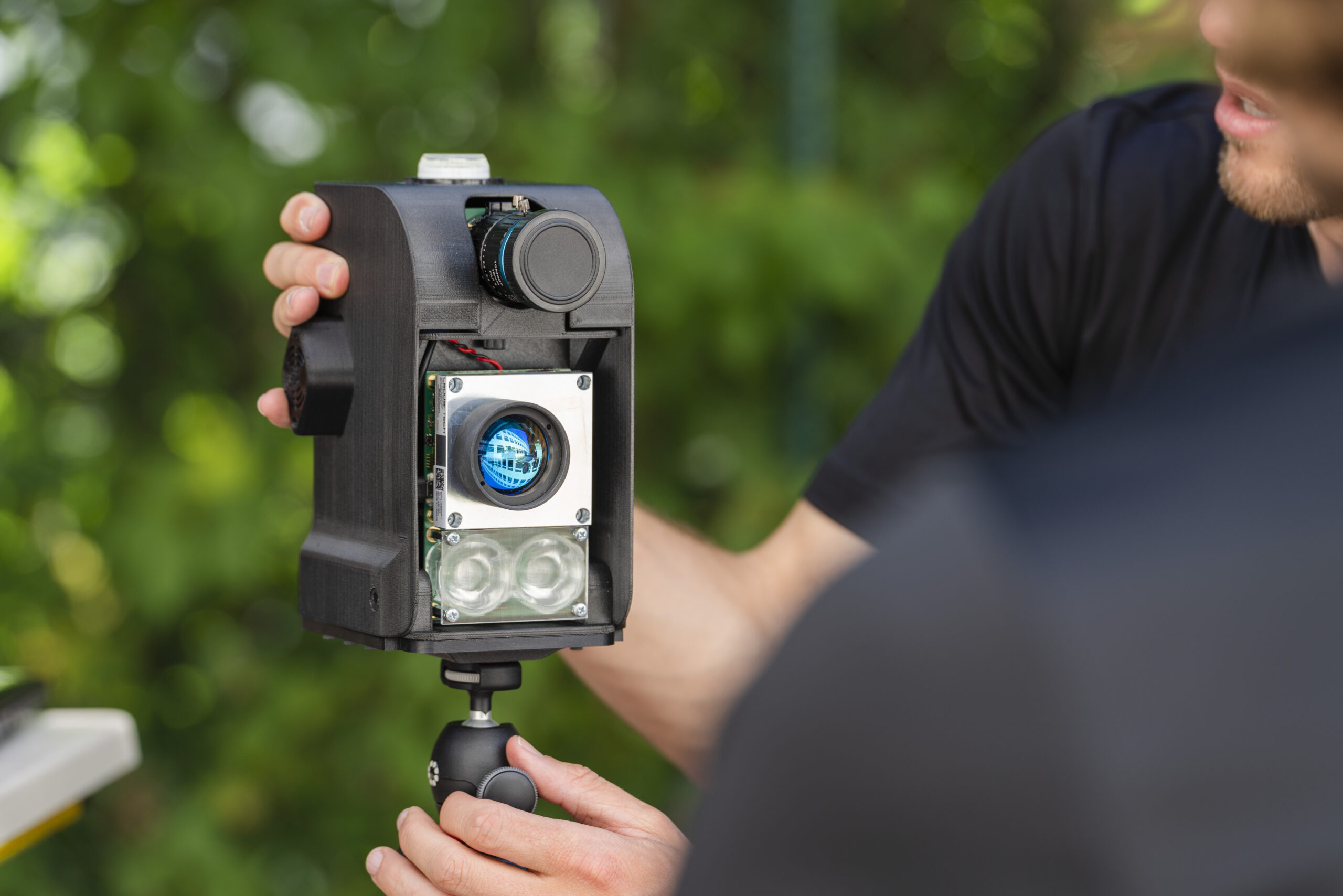
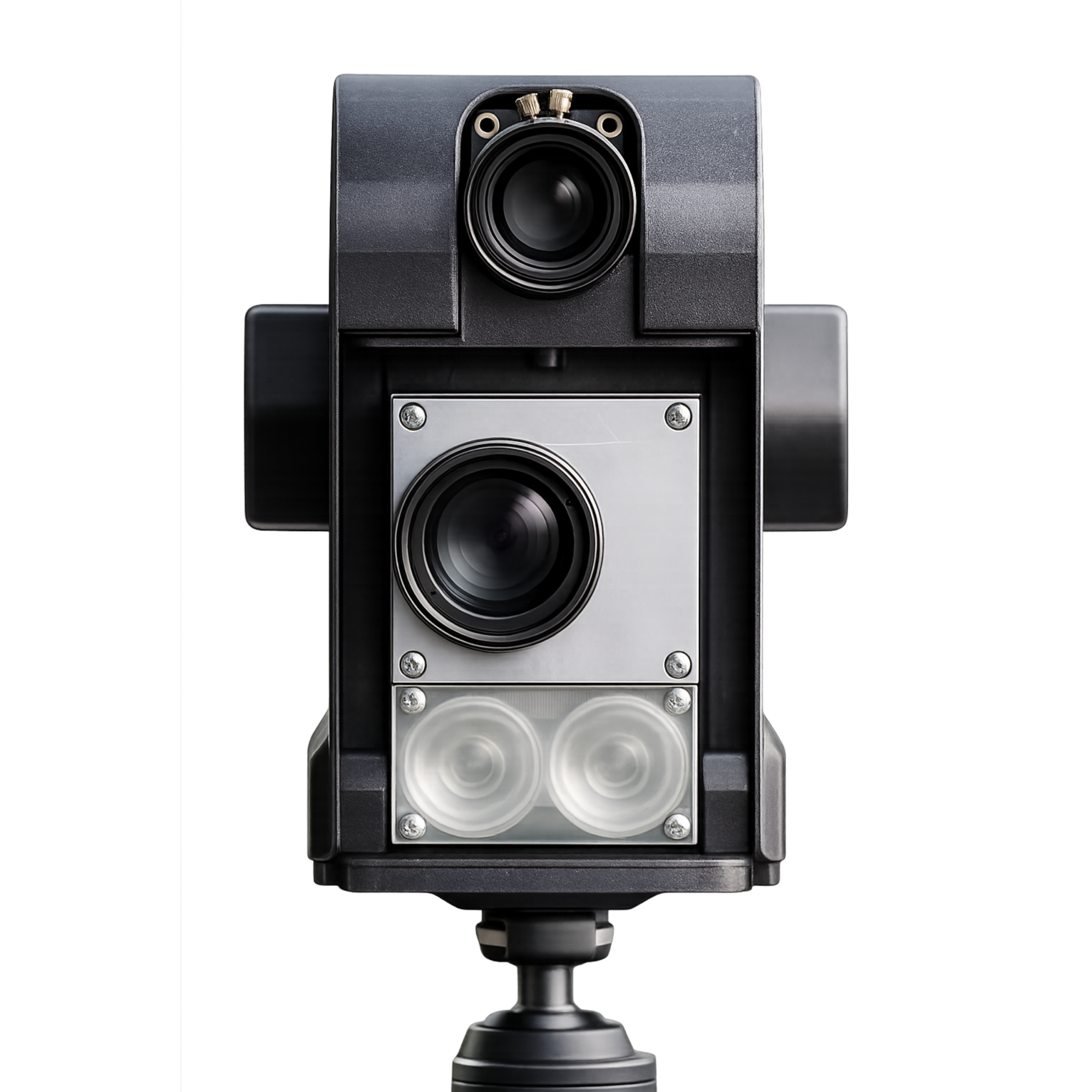
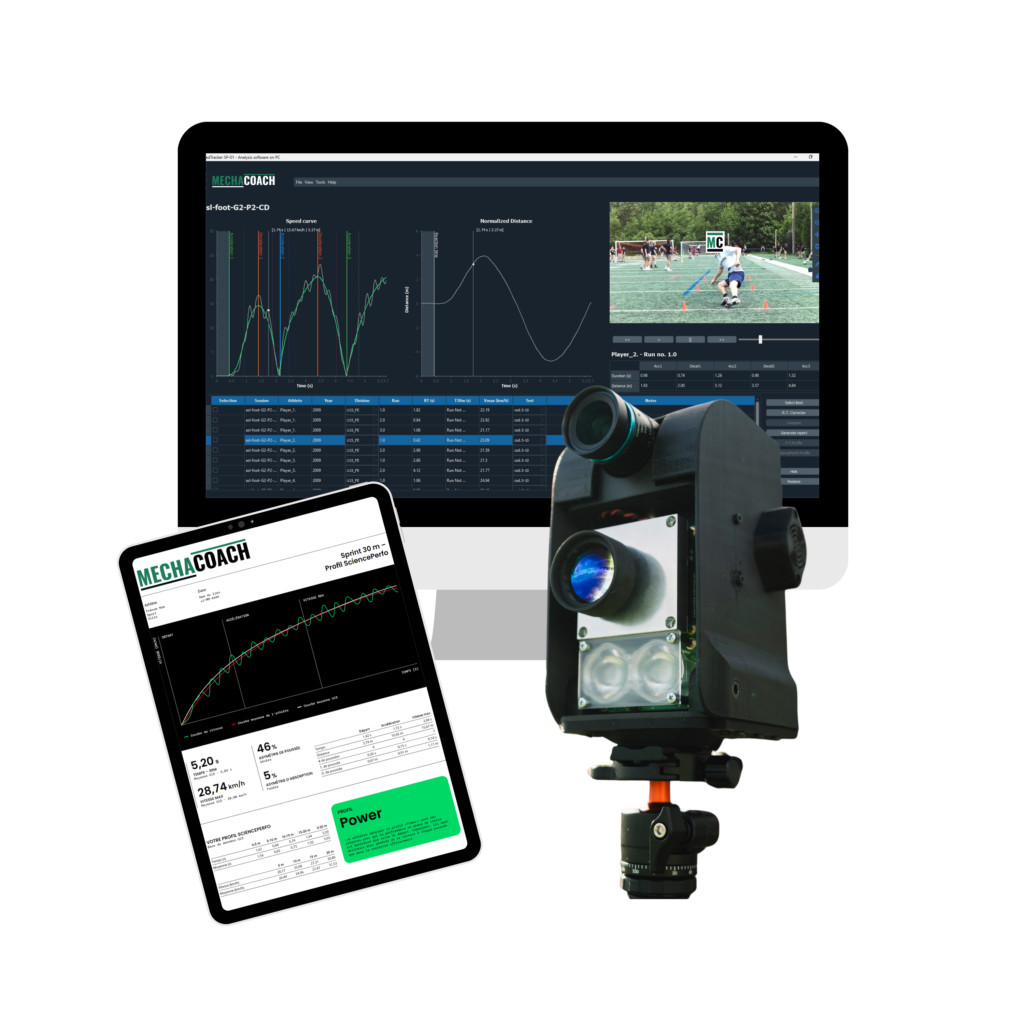
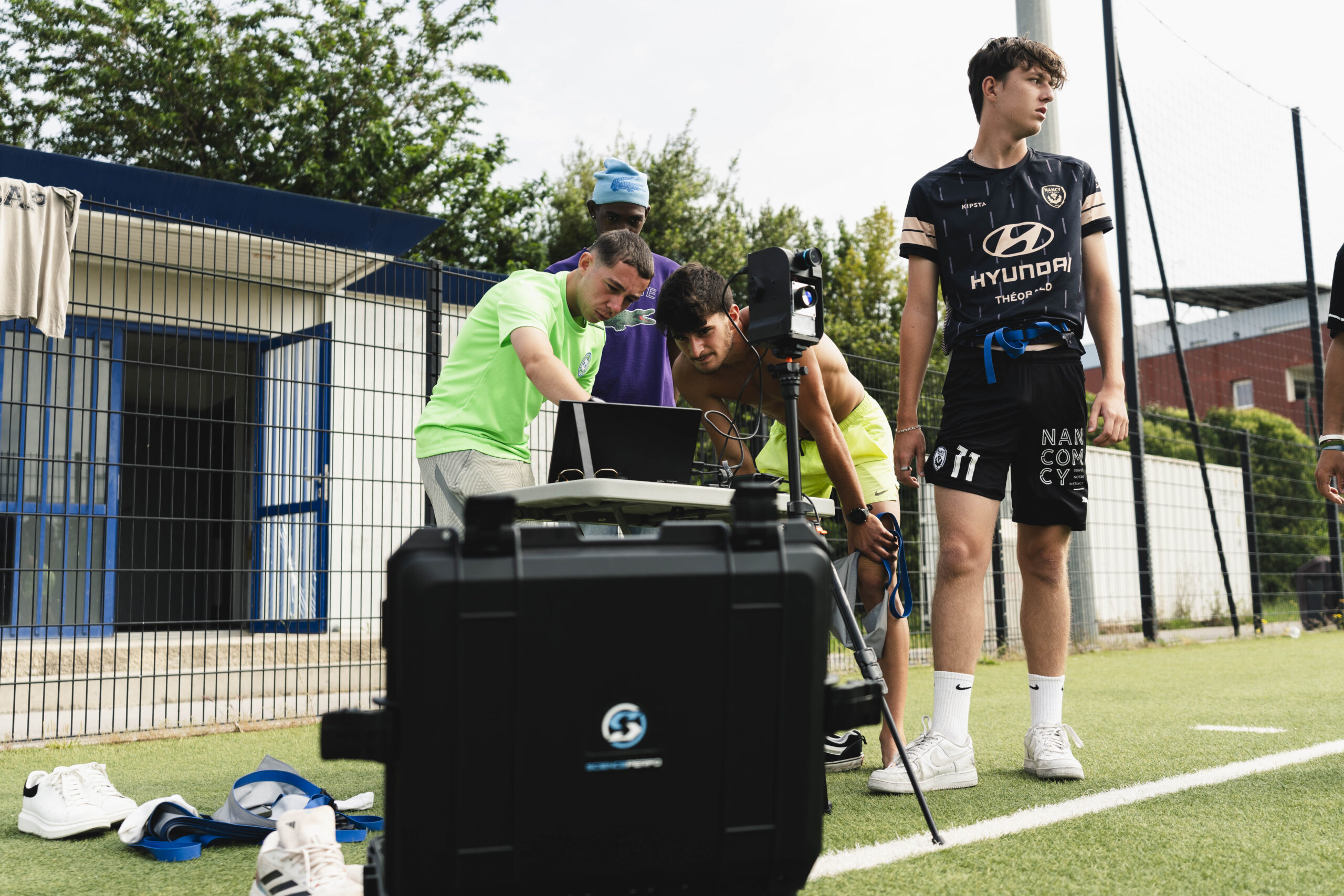
SpeedTracker captures movement with unmatched precision, providing objective data on speed, acceleration, and force production.
Each test generates clear insights into an athlete’s mechanical profile, helping identify strengths, asymmetries, and areas for improvement.
From evaluation to training, every insight is designed to support better decisions and better performance.

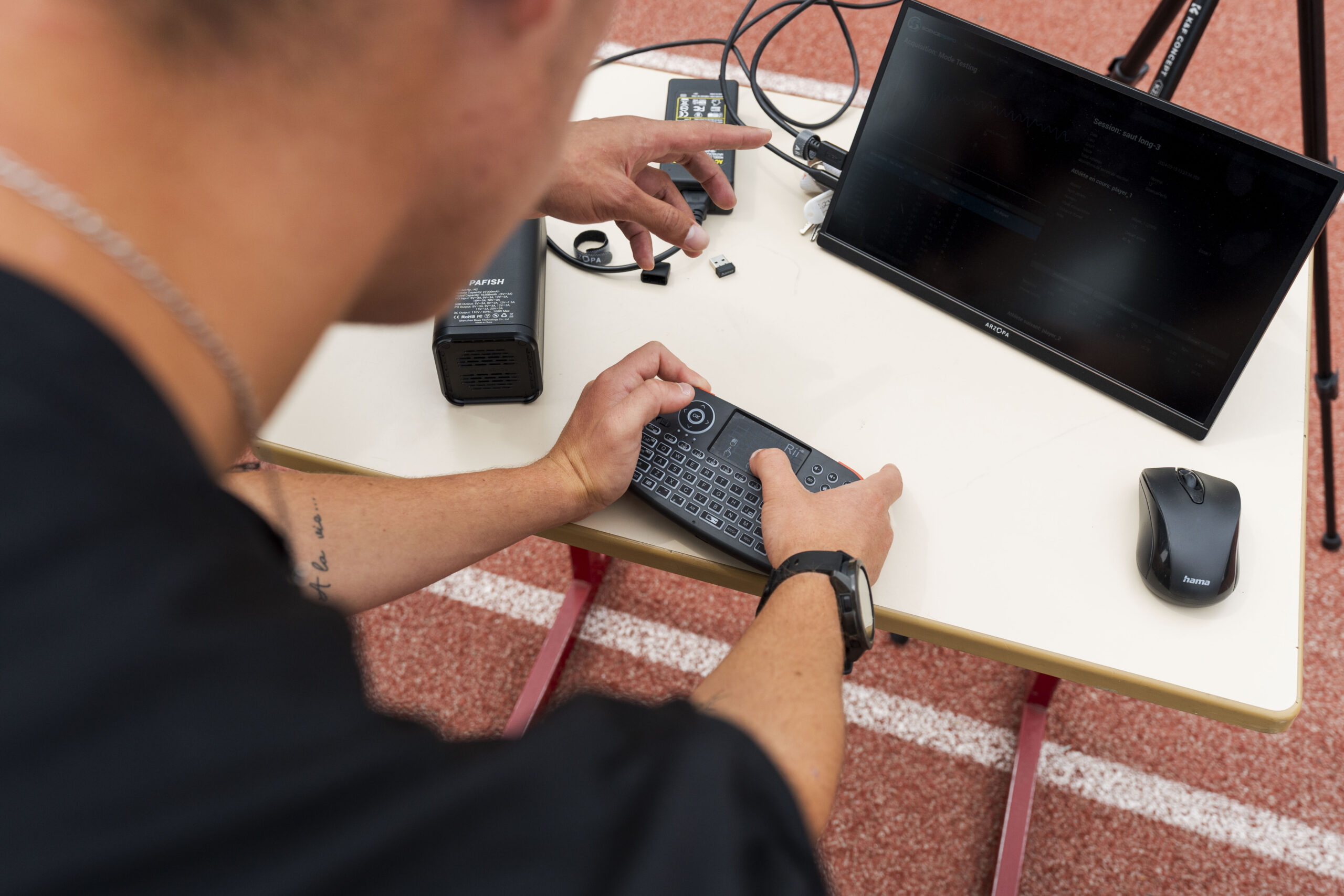
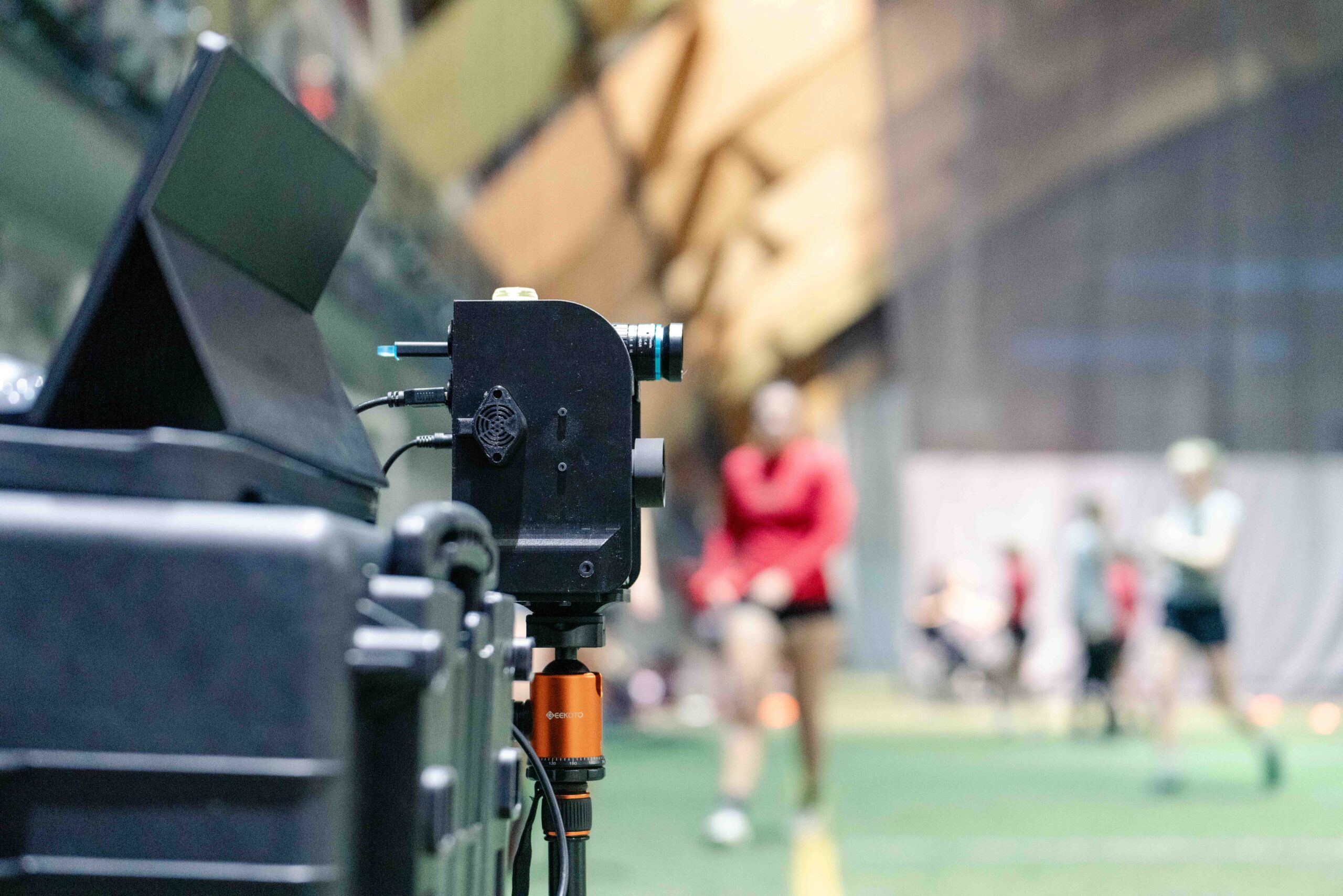
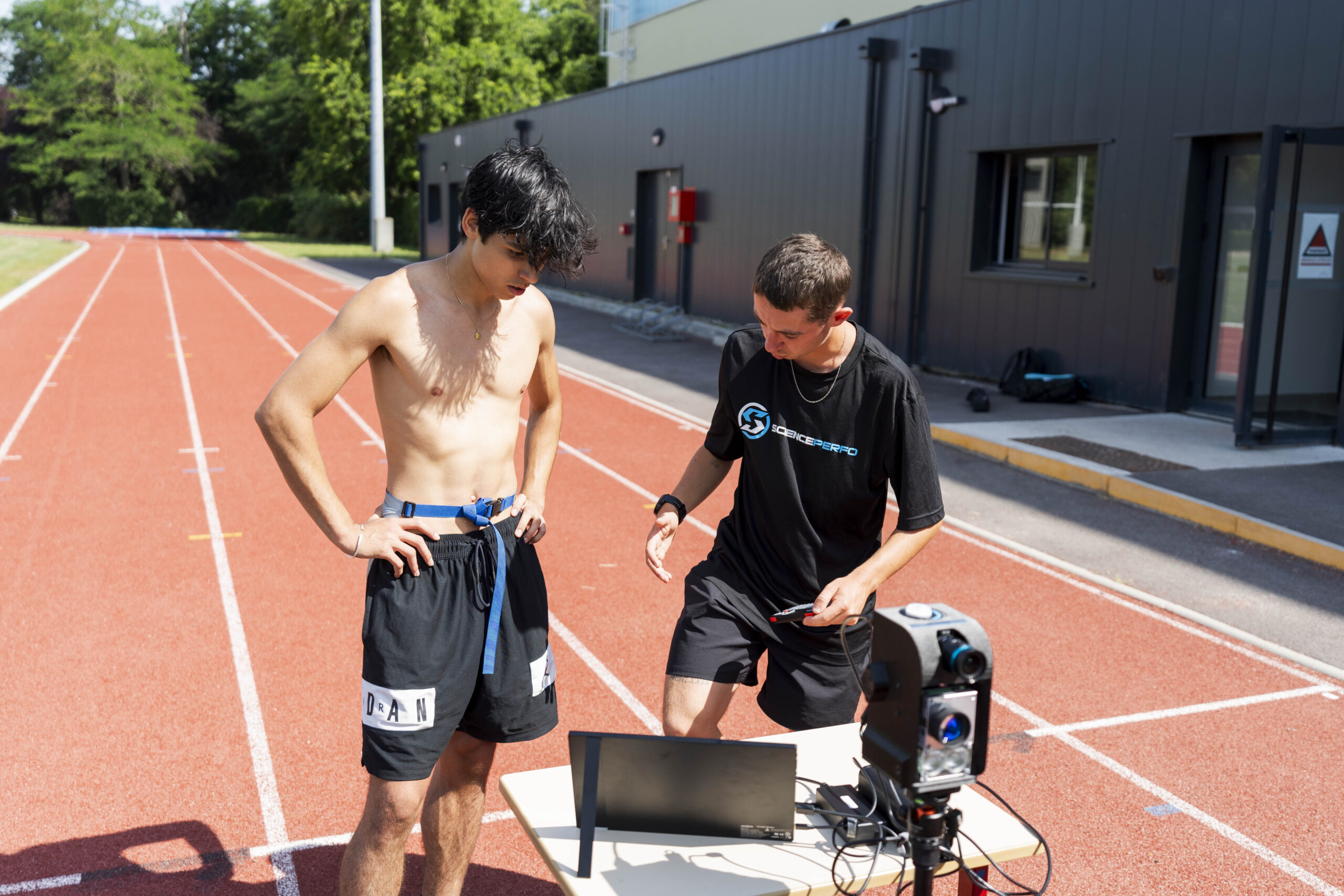
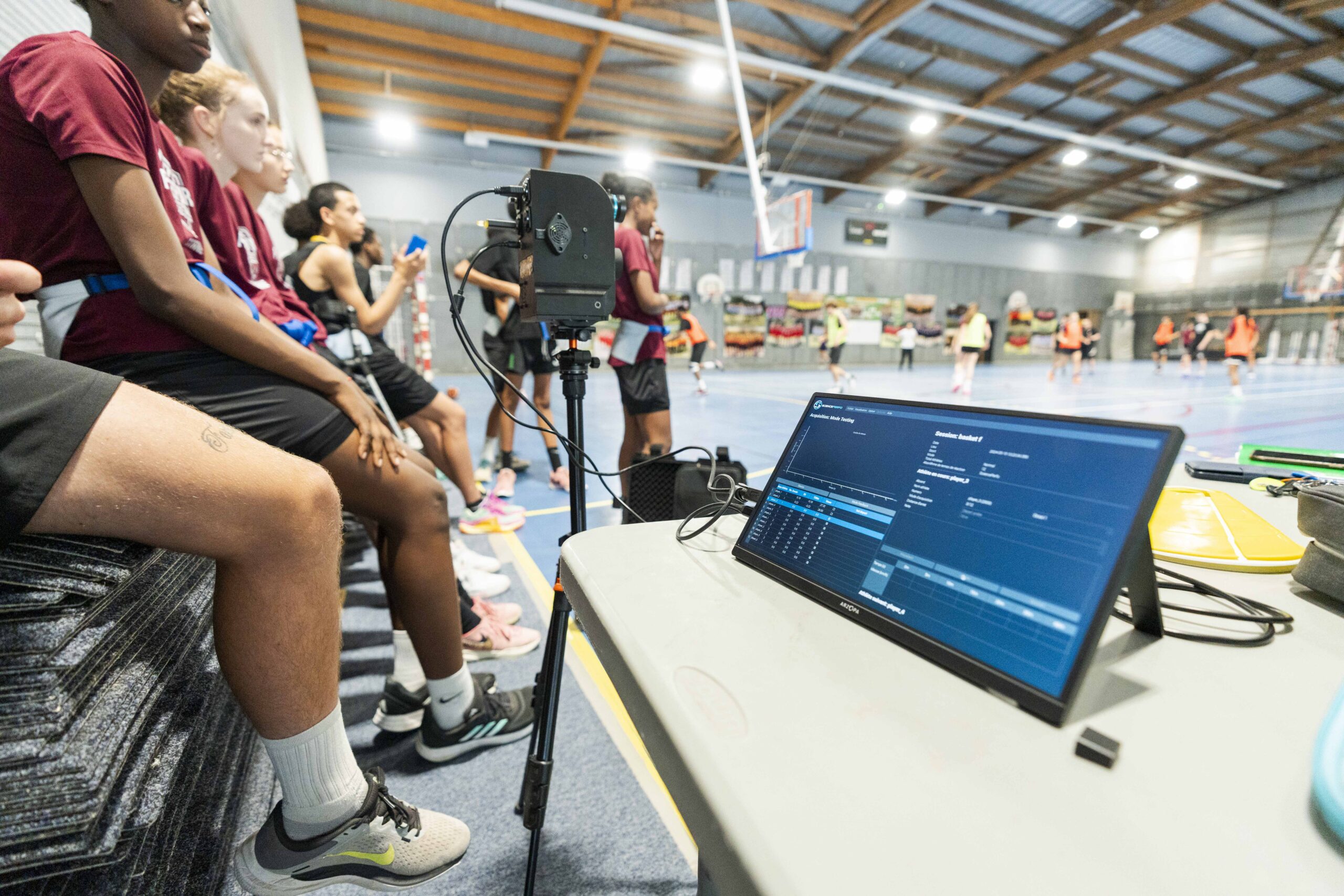
specialists in the Production Analysis Application of data
Sprint Mechanics
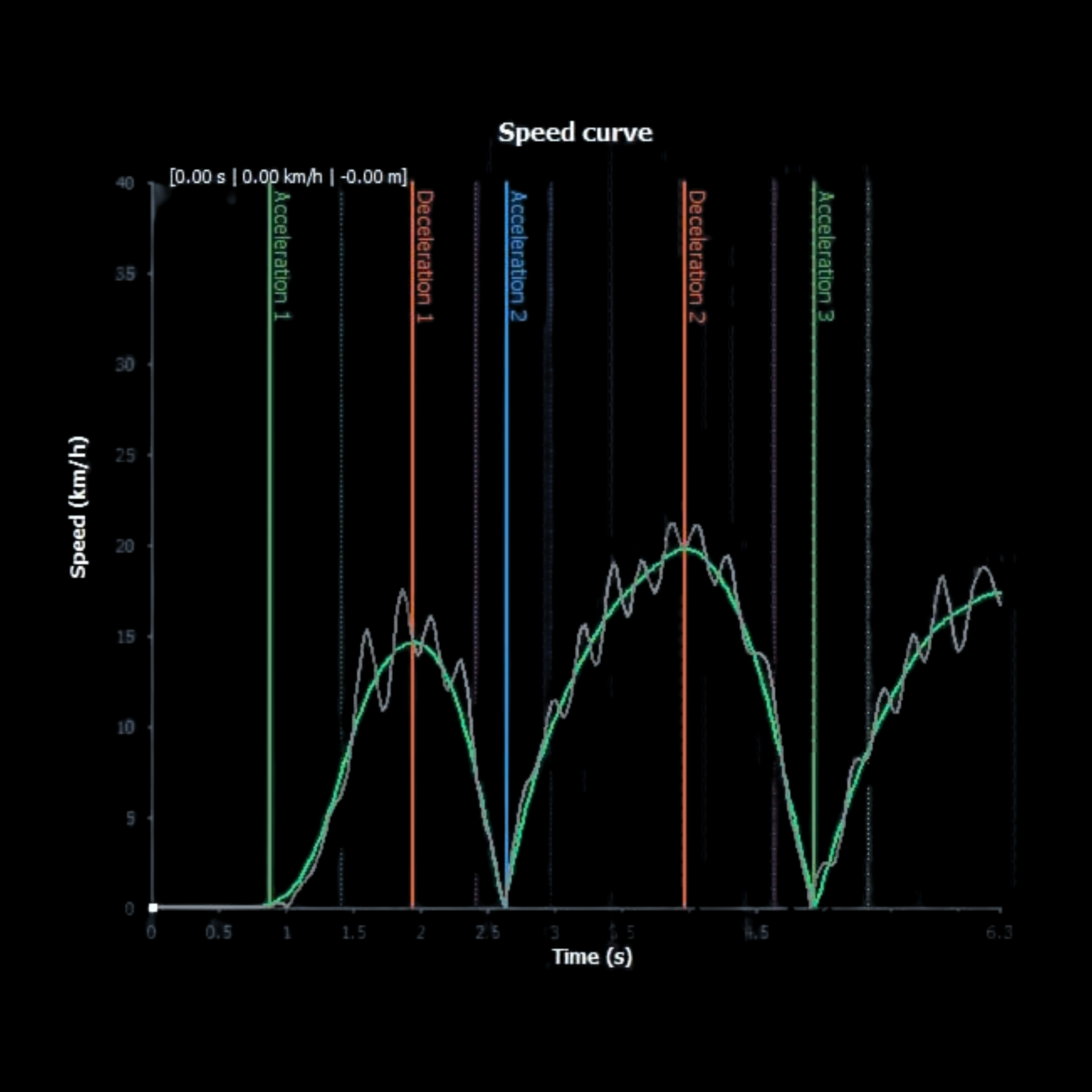
Analysis of acceleration and maximal speed phases during sprinting.
Metrics include:
- sprint time splits (0–5 m, 5–10 m, etc.)
- step time and step length
- step count
- propulsion asymmetry
- absorption asymmetry
- maximal sprint speed
- phase timing and distances
These variables describe how athletes generate and maintain sprint velocity.
Force–Velocity Profile
Mechanical profile of horizontal force production during sprint acceleration.
Metrics include:
- F0 (maximal horizontal force)
- V0 (maximal theoretical velocity)
- Pmax (maximal mechanical power)
- RFmax (ratio of horizontal force)
- DRF (rate of force decrease)
These variables allow characterization of an athlete’s sprint mechanical profile.
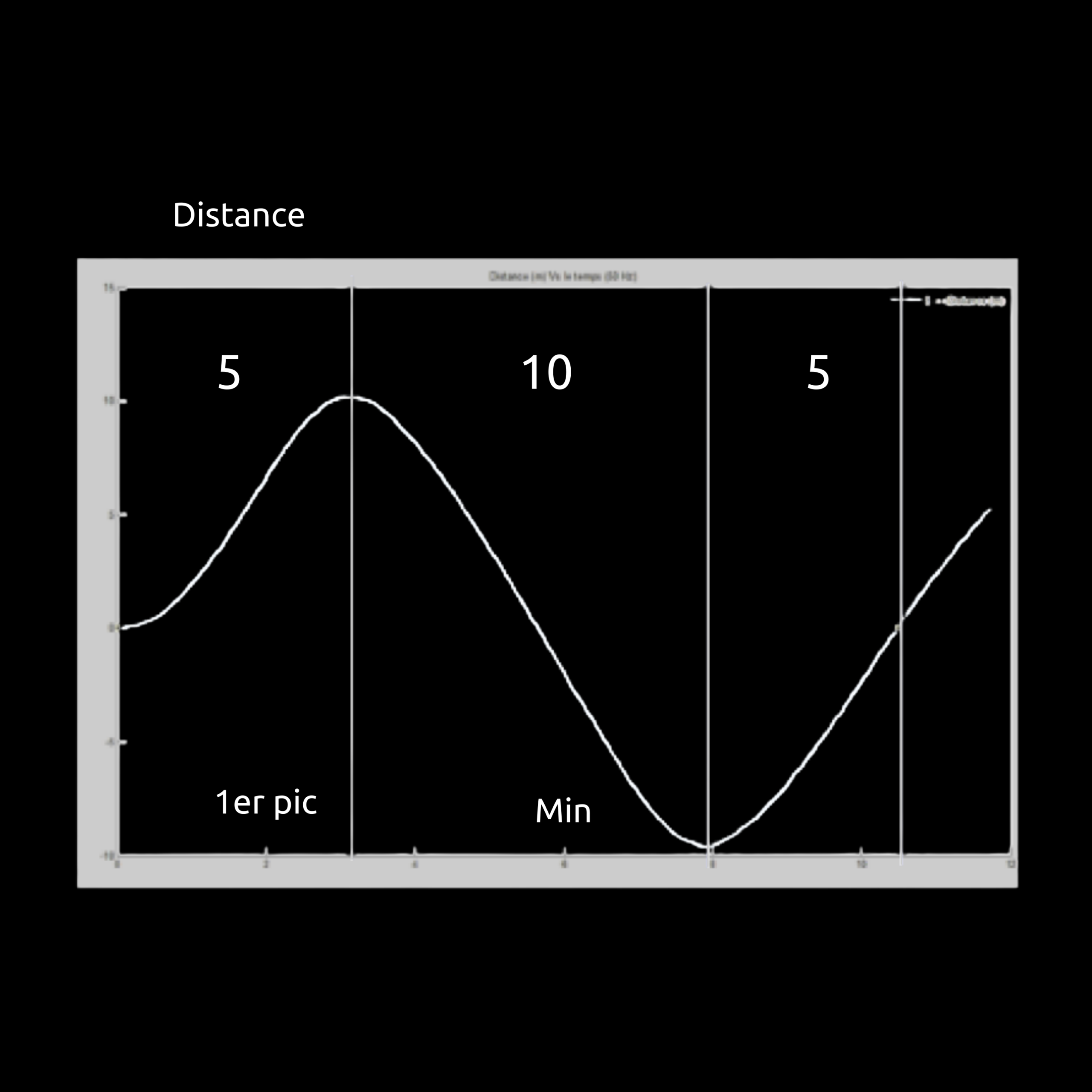
Change of Direction Mechanics
Biomechanical analysis of braking and re-acceleration strategies during directional changes.
Metrics include:
- acceleration phase timing
- deceleration phase timing
- braking distance
- re-acceleration time
- early vs late braking mechanics
These variables help quantify how athletes control momentum during directional changes.
Raw Data and Time-Series Export
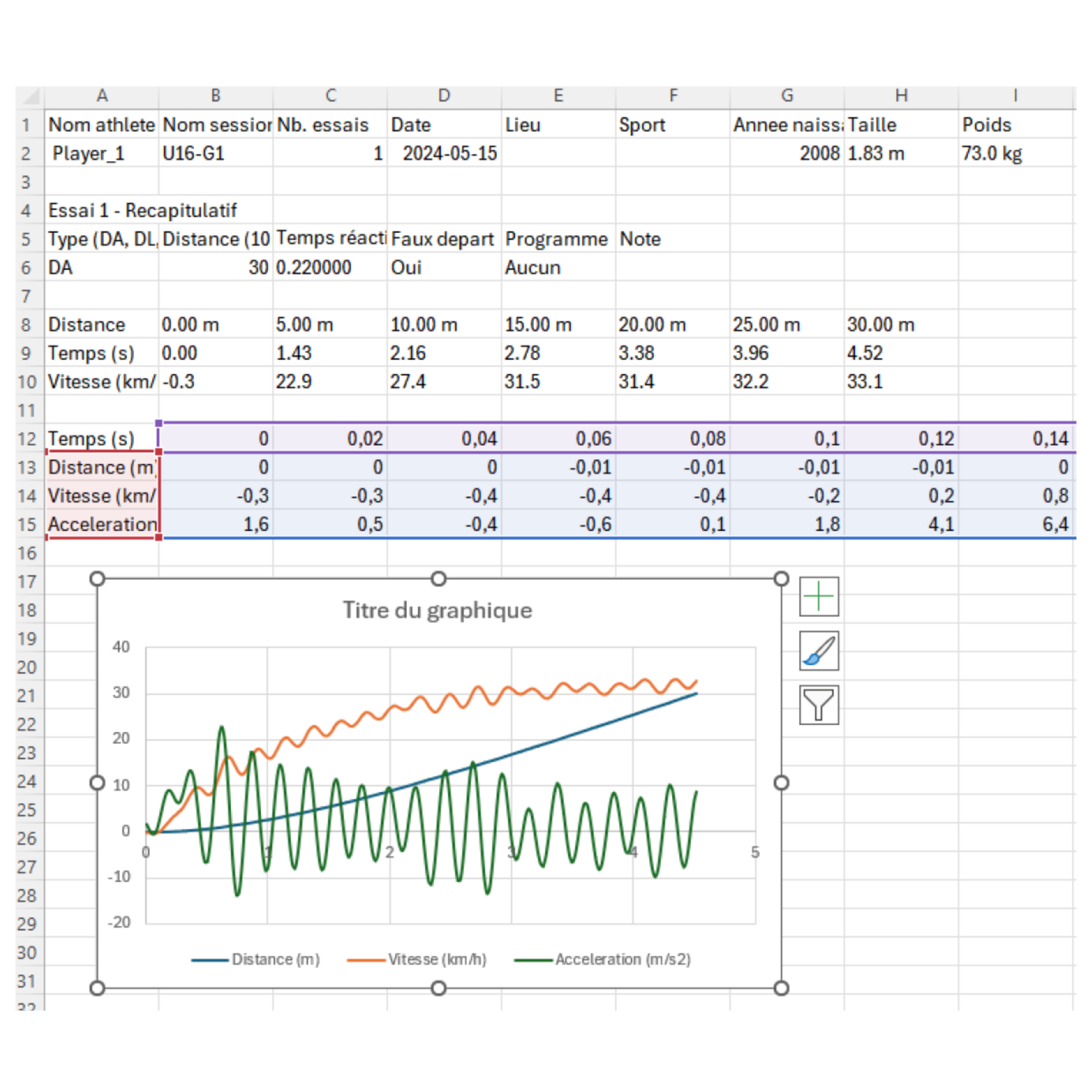
For research applications, the system also provides access to full time-series data.
Exported variables include:
- time
- distance
- velocity
- filtered velocity
- acceleration
These datasets allow researchers to perform independent analyses and compute additional biomechanical variables.
Why these metrics matter
These biomechanical variables allow practitioners and researchers to:
- identify locomotion inefficiencies
- detect asymmetries between limbs
- quantify braking capacity
- analyze sprint mechanics
- characterize locomotion strategies
- generate individualized training interventions
Sprint Mechanics
Force–Velocity Profile
Change of Direction Mechanics
Raw Data and Time-Series Export
Why these metrics matter
Analysis of acceleration and maximal speed phases during sprinting.
Metrics include:
- sprint time splits (0–5 m, 5–10 m, etc.)
- step time and step length
- step count
- propulsion asymmetry
- absorption asymmetry
- maximal sprint speed
- phase timing and distances
These variables describe how athletes generate and maintain sprint velocity.
Mechanical profile of horizontal force production during sprint acceleration.
Metrics include:
- F0 (maximal horizontal force)
- V0 (maximal theoretical velocity)
- Pmax (maximal mechanical power)
- RFmax (ratio of horizontal force)
- DRF (rate of force decrease)
These variables allow characterization of an athlete’s sprint mechanical profile.
Biomechanical analysis of braking and re-acceleration strategies during directional changes.
Metrics include:
- acceleration phase timing
- deceleration phase timing
- braking distance
- re-acceleration time
- early vs late braking mechanics
- center of mass lateral displacement
These variables help quantify how athletes control momentum during directional changes.
For research applications, the system also provides access to full time-series data.
Exported variables include:
- time
- distance
- velocity
- filtered velocity
- acceleration
These datasets allow researchers to perform independent analyses and compute additional biomechanical variables.
These biomechanical variables allow practitioners and researchers to:
- identify locomotion inefficiencies
- detect asymmetries between limbs
- quantify braking capacity
- analyze sprint mechanics
- characterize locomotion strategies
- generate individualized training interventions
We translate complex biomechanical data into clear, actionable insights for performance.
Validated by research
Our approach is grounded in scientific research and validated through applied studies in real-world conditions.
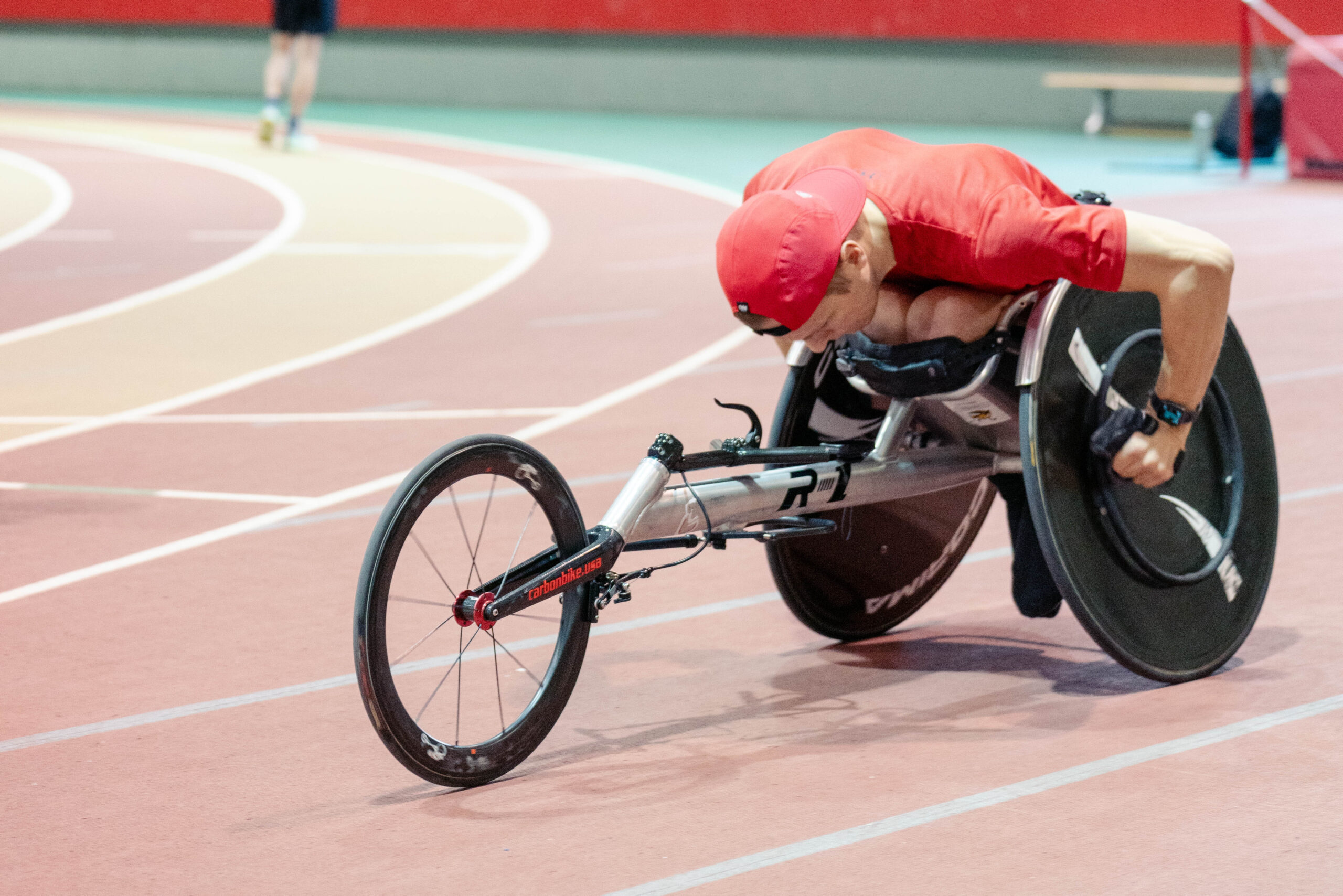
Validity and Reliability of Inertial Motion Unit-Based
Performance Metrics During Wheelchair Racing Propulsion.
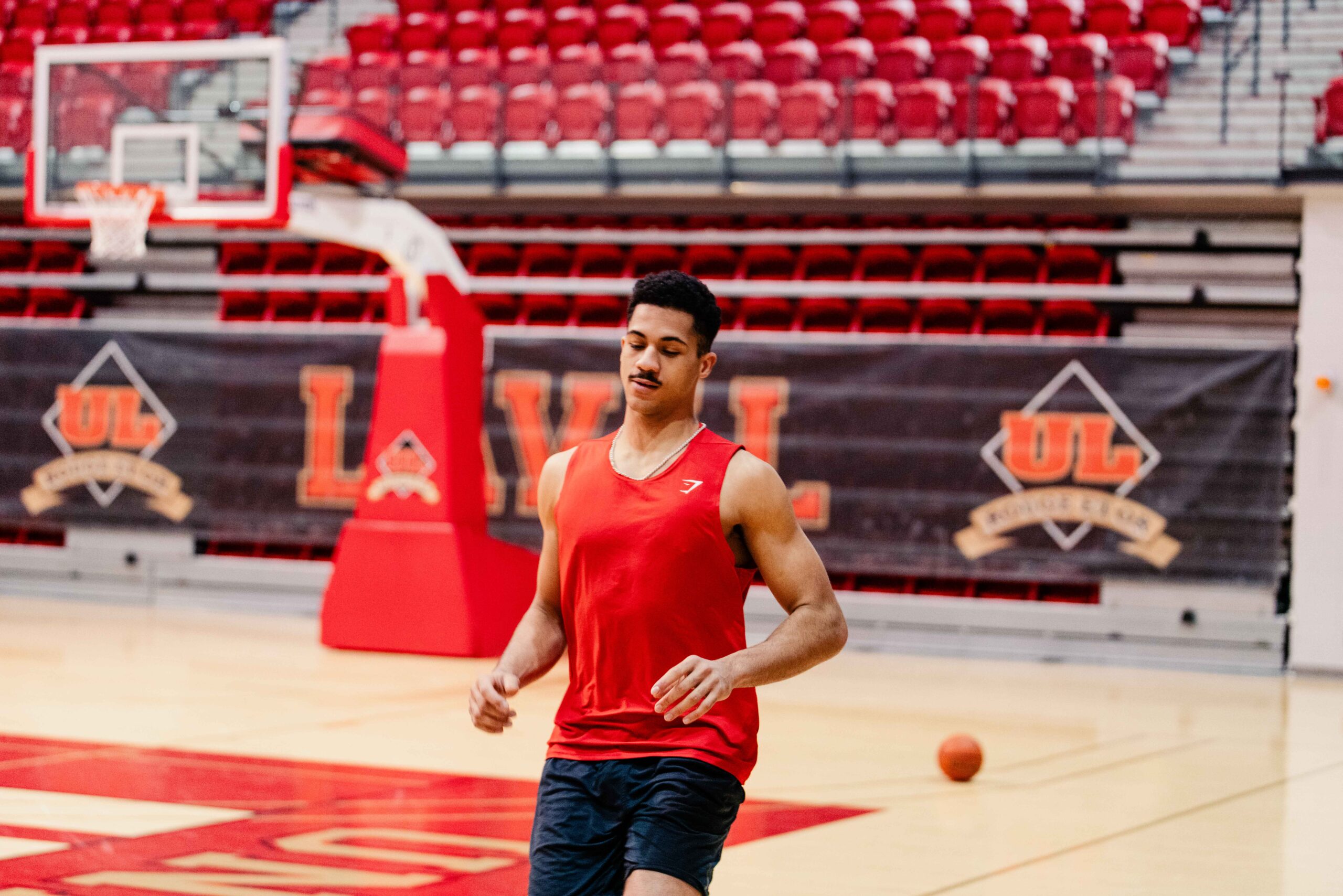
Impact of Hypoventilation Training on Muscle Oxygenation, Myoelectrical Changes, Systemic [K+], and Repeated-Sprint Ability in Basketball Players.
Validity and Reliability of Inertial Motion Unit-Based
Performance Metrics During Wheelchair Racing Propulsion.
Impact of Hypoventilation Training on Muscle Oxygenation, Myoelectrical Changes, Systemic [K+], and Repeated-Sprint Ability in Basketball Players.
These findings directly support the development of our performance analysis tools.
Since
science in the service of sport
SciencePerfo was founded in Quebec City by experts in biomechanics, kinesiology, and sports physiotherapy, all deeply rooted in the academic world. Driven by a desire to better understand movement and performance, the team developed its first tools through applied research. Today, after years of continuous development, SpeedTracker delivers highly precise and reliable insights for analyzing athletic performance in real-world conditions.
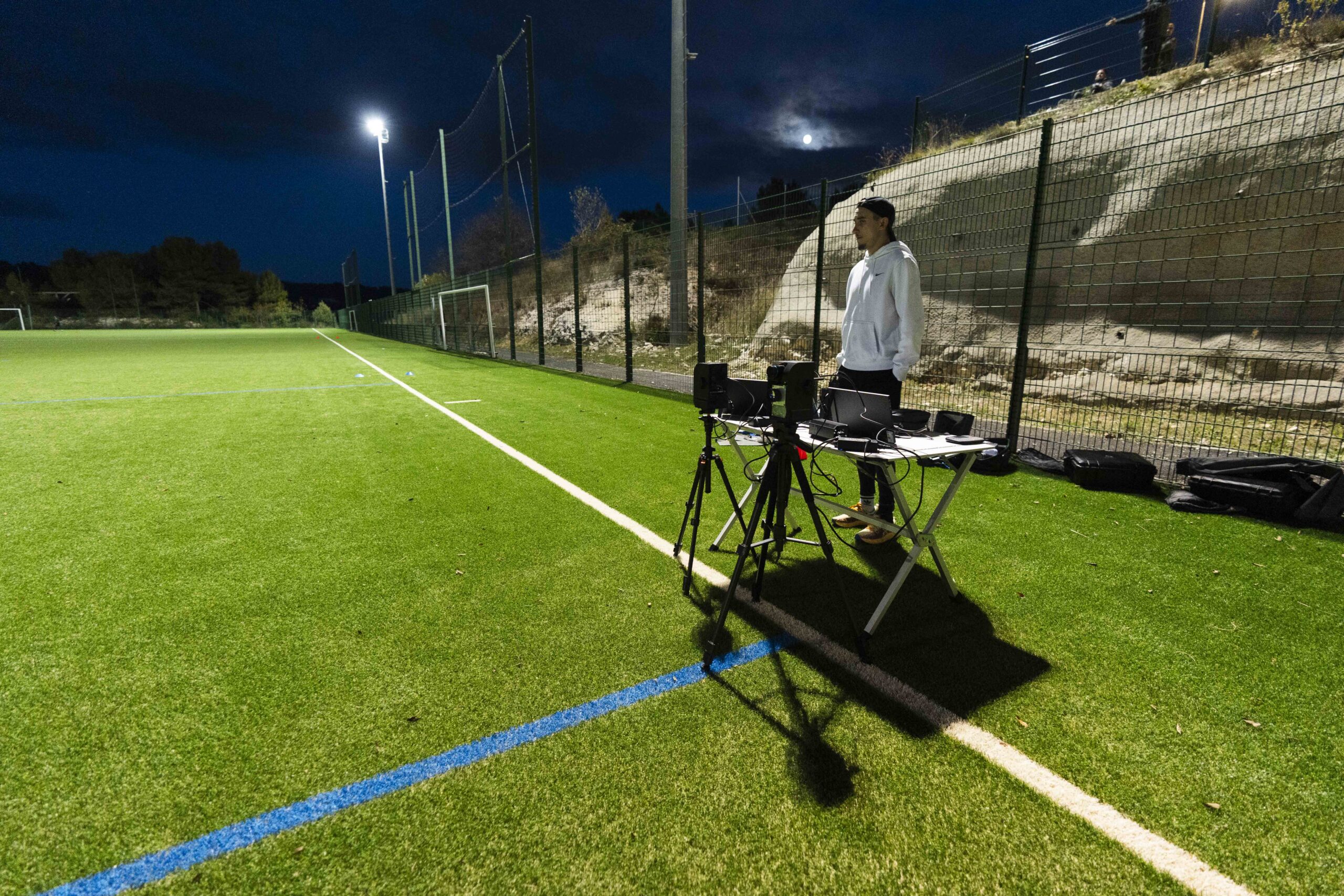
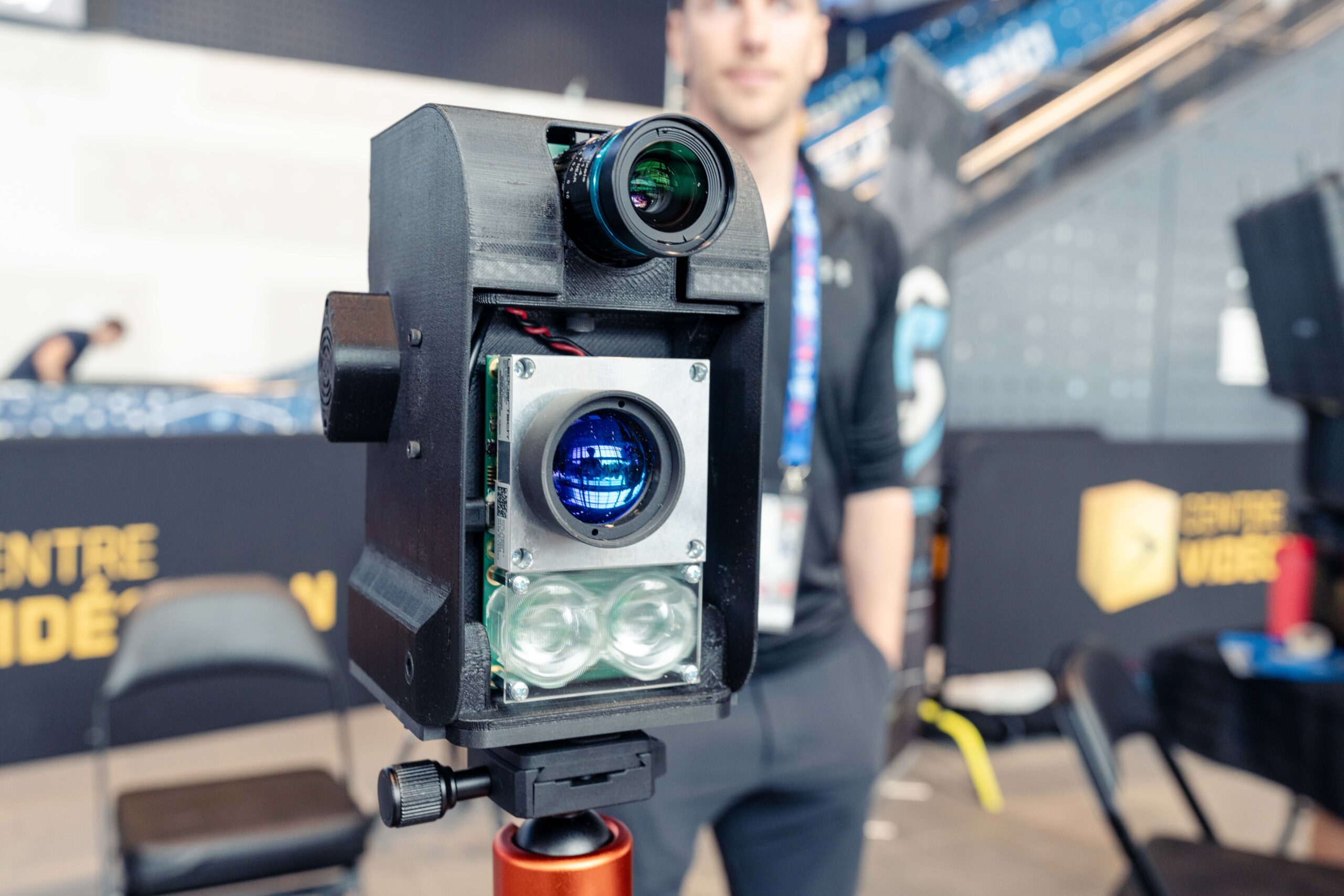
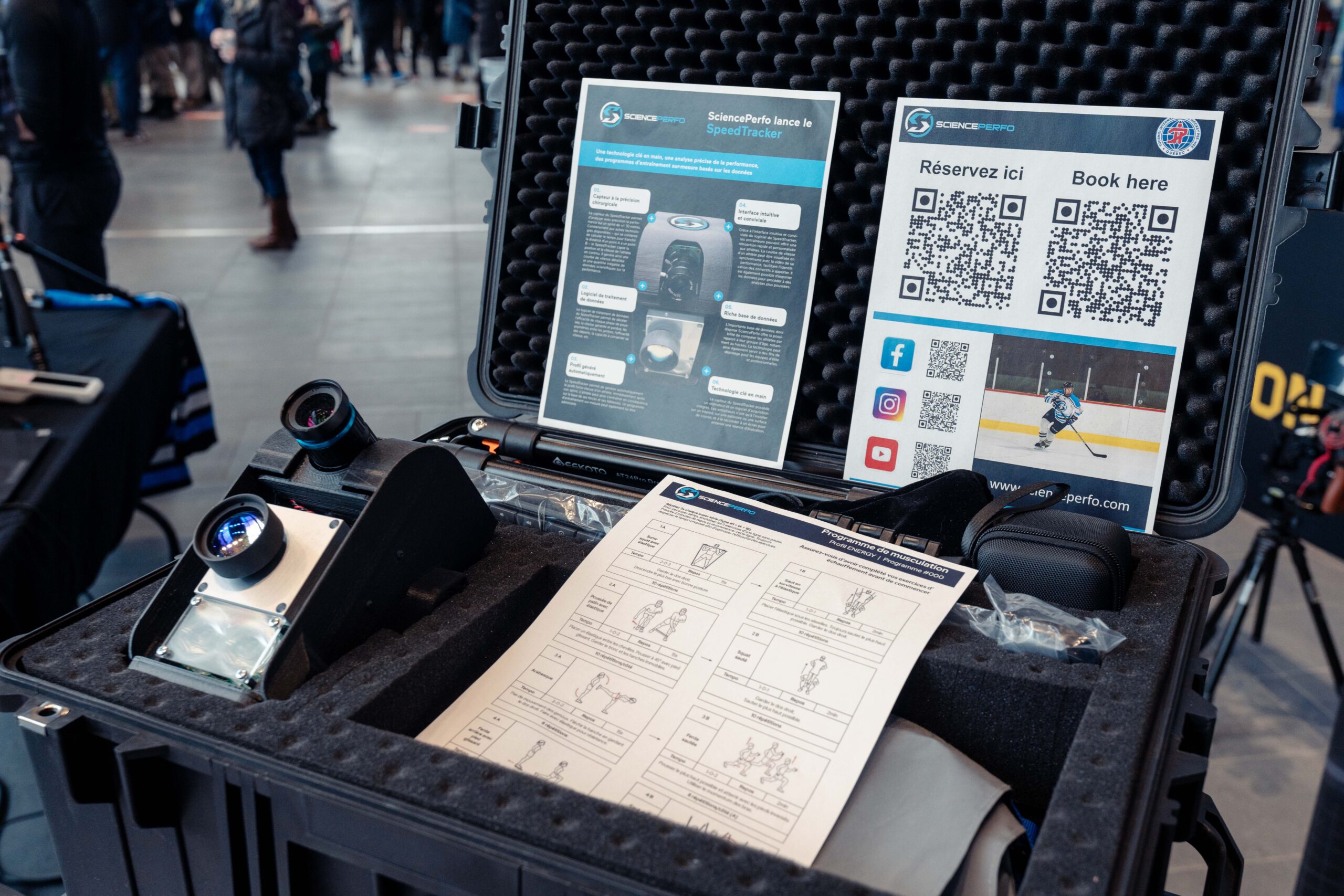
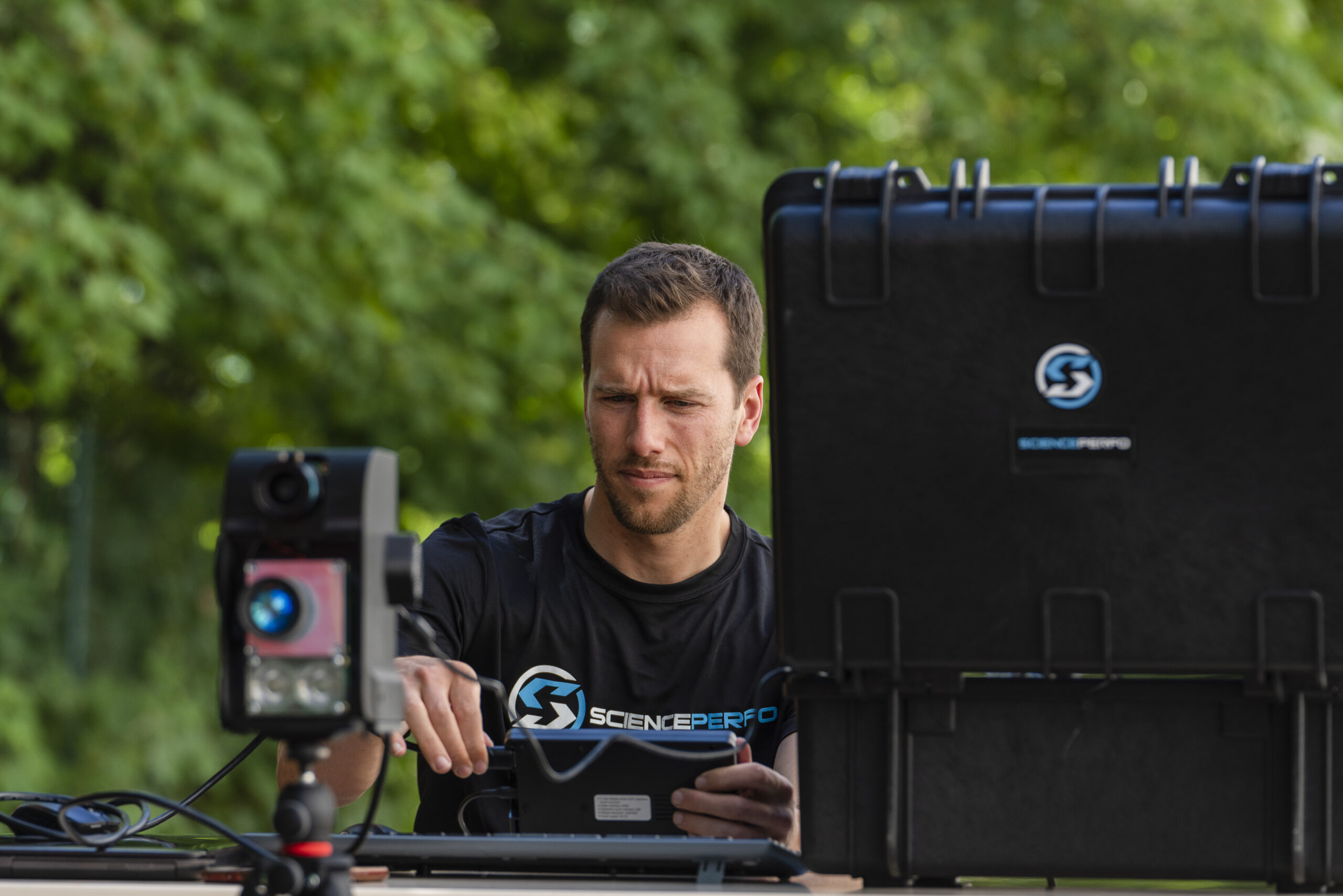
A field-ready system designed to measure and analyze performance with unmatched precision.
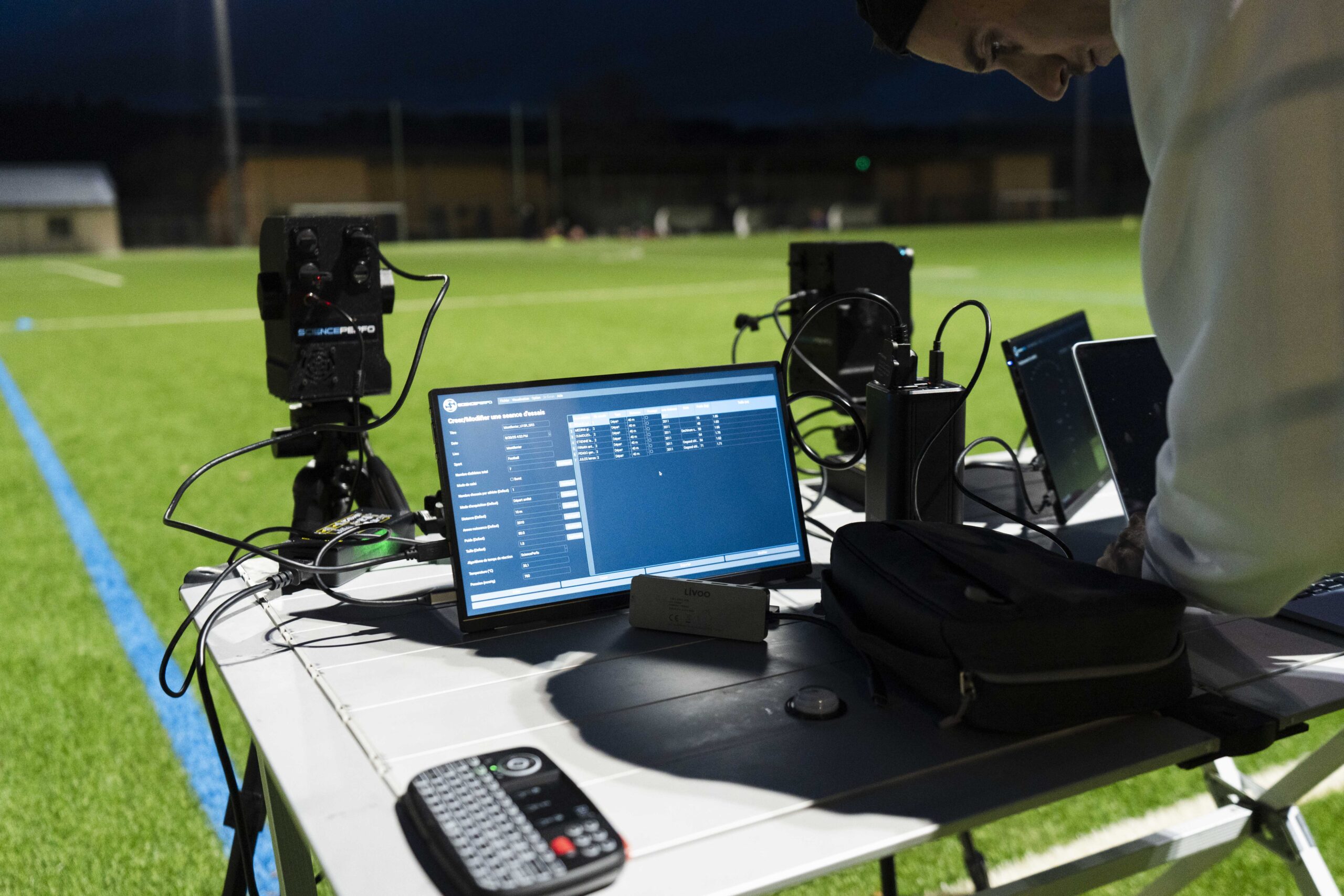
- High-frequency data capture (50 Hz / 50 FPS) for accurate motion tracking
- Millimeter-level precision (+/- 6 mm) for reliable performance analysis
- Up to 40 m range for full sprint and movement assessment
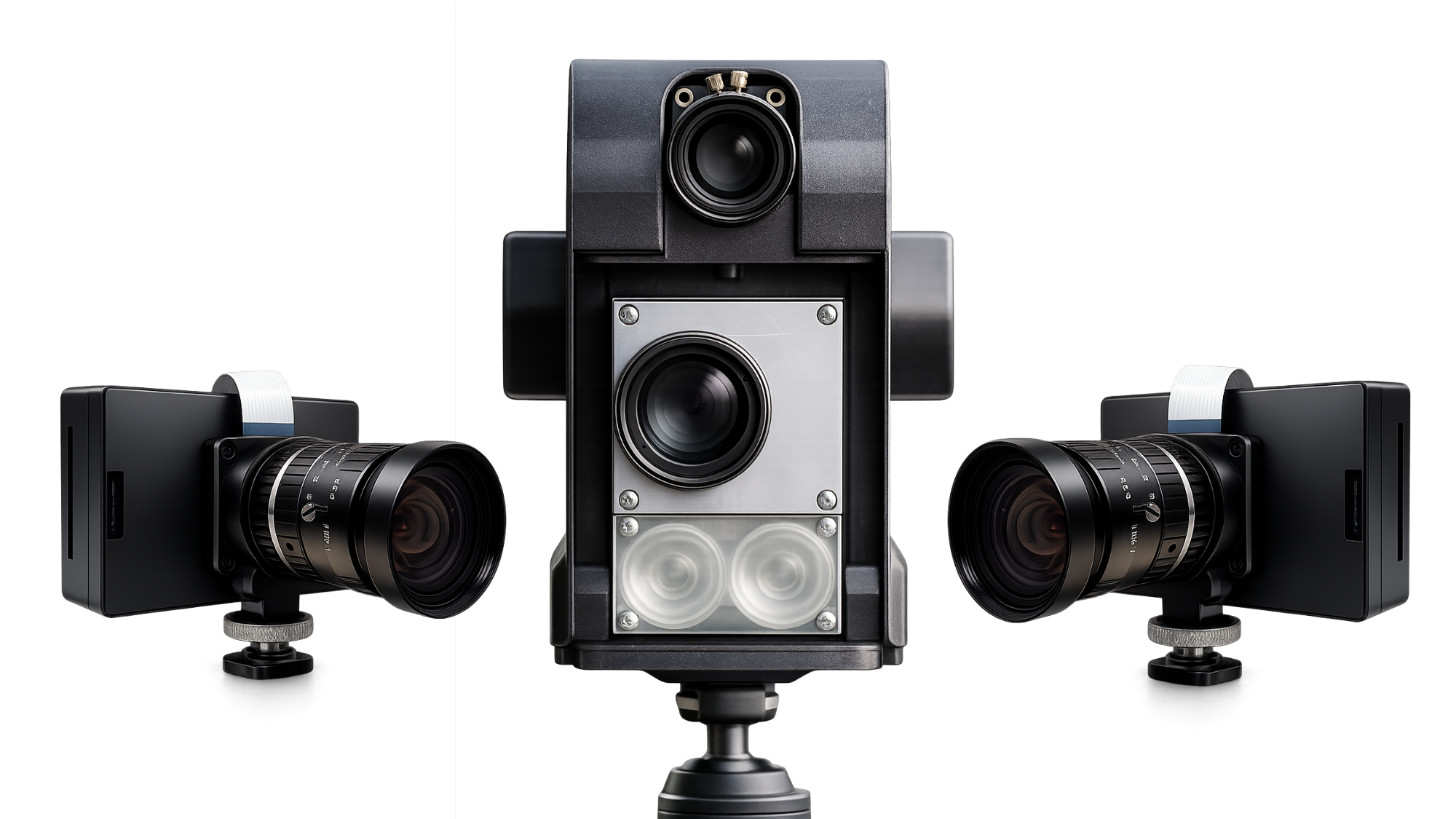
- Synchronized video and speed data for deeper technical insights
- Synchronized sagittal plane cameras for precise side-view movement analysis
- Compare multiple trials to track progress over time
- Export data (CSV) for advanced analysis and research
- Integrated analysis tools (angles, curves, annotations)
- Enhanced data accuracy through precise reaction time adjustment
An impressive ingenious accuracy Lidar technology
the technology
- Designed specifically for sports performance analysis
- Adaptable to multiple testing protocols (sprint, COD, skating)
- Combines technology with field expertise
- Developed by biomechanics specialists
- Continuously refined through research and real-world use
Continuously captures position and speed in real time
Unlike traditional systems that only measure time between two points, SpeedTracker continuously captures the athlete’s position and speed throughout the entire movement.
This approach generates a richer, more precise dataset, allowing for a deeper understanding of performance mechanics.
From data to actionable insights
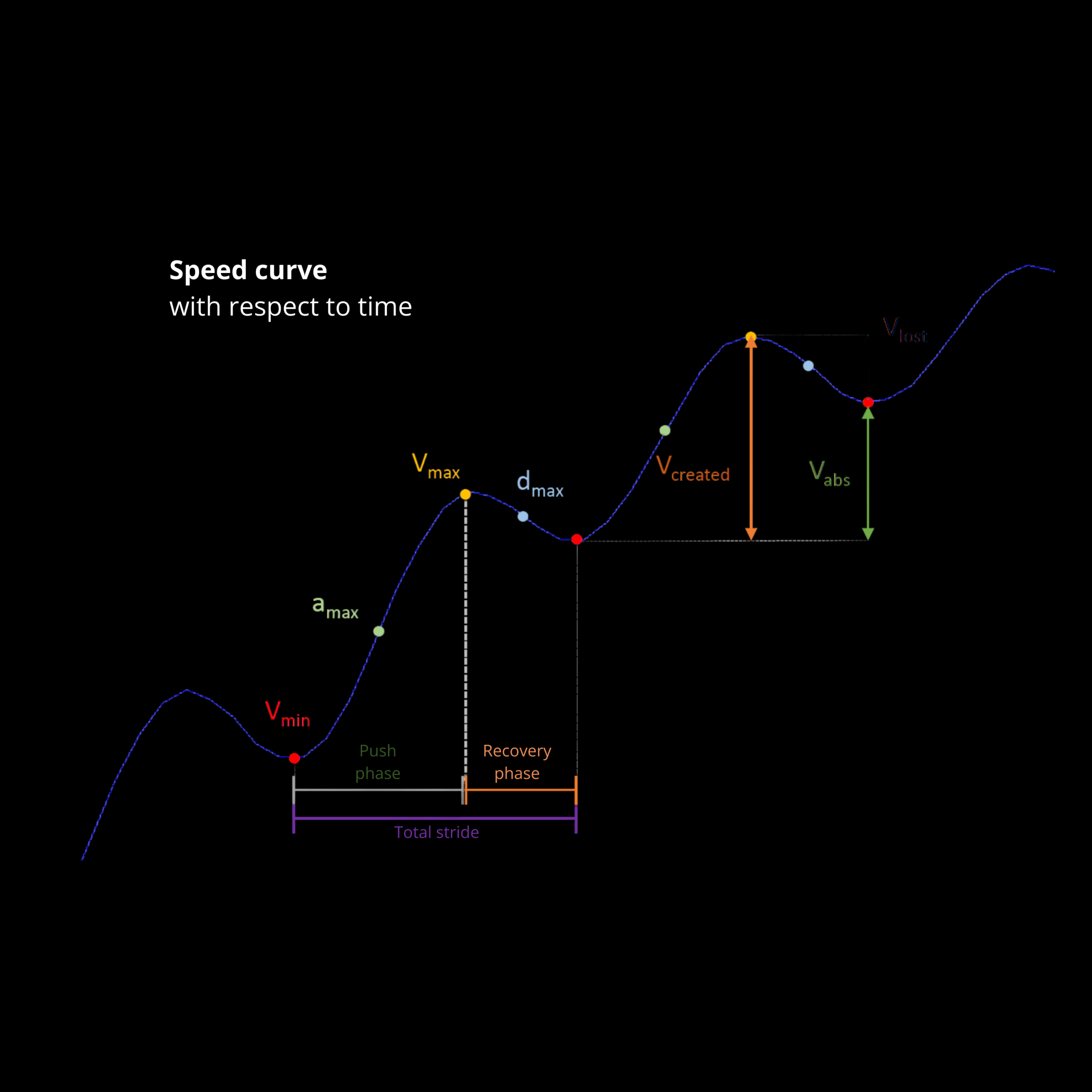
SpeedTracker’s data processing software transforms raw measurements into meaningful performance insights.
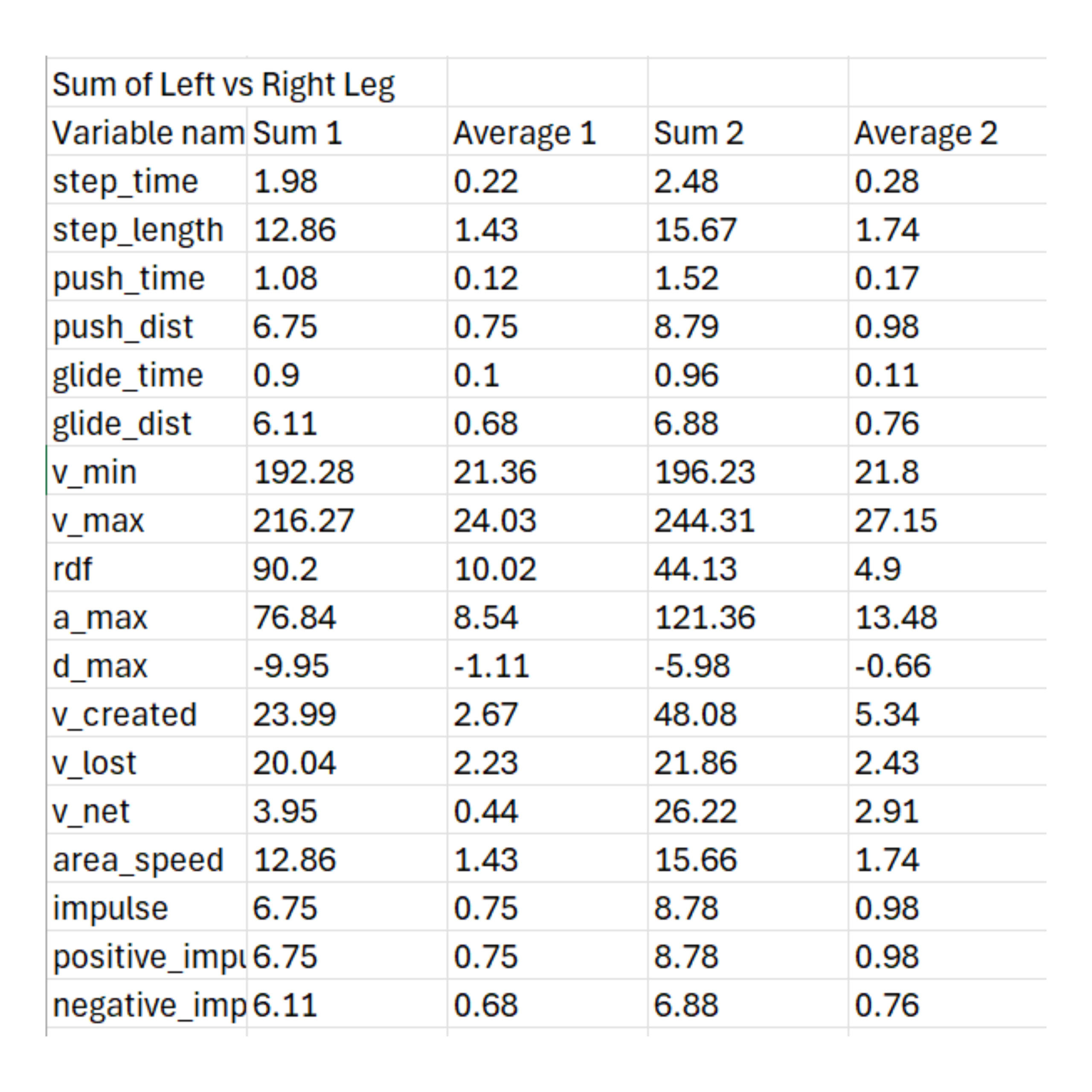
It allows you to analyze:
- The efficiency of each push phase
- Speed generation and loss
- Left-right asymmetries
- Start effectiveness
- The ability to maintain speed over time
Benchmark your performance
SciencePerfo’s growing database allows athletes to be benchmarked against their peers based on age and level.
This provides valuable context to better understand performance and identify development opportunities.
The system can also support talent identification for elite and professional organizations.
Discover our world
MechaCoach is developed by SciencePerfo, a Canadian sports technology company specializing in biomechanics and performance analysis.
Our team combines research expertise and field experience to deliver tools designed for real-world performance.
A solution for every situation
Clubs
Optimize team performance with data-driven biomechanics
Identify inefficiencies, reduce asymmetries and improve on-field performance.
agencies
Unlock your athletes’ full potential
Provide objective performance insights and individualized development strategies.
individuals
Train smarter with personalized biomechanics analysis
Understand your movement and follow a program tailored to your profile.